A Broadmeadow View
A Monthly Series: Watching Where We Have Been
By Joe Broadmeadow
September 2026
Somewhere in the great automotive design meeting of the late sixties, a man stood up, adjusted his tie, and said, “What if we put the children in the trunk, but gave them a window?”
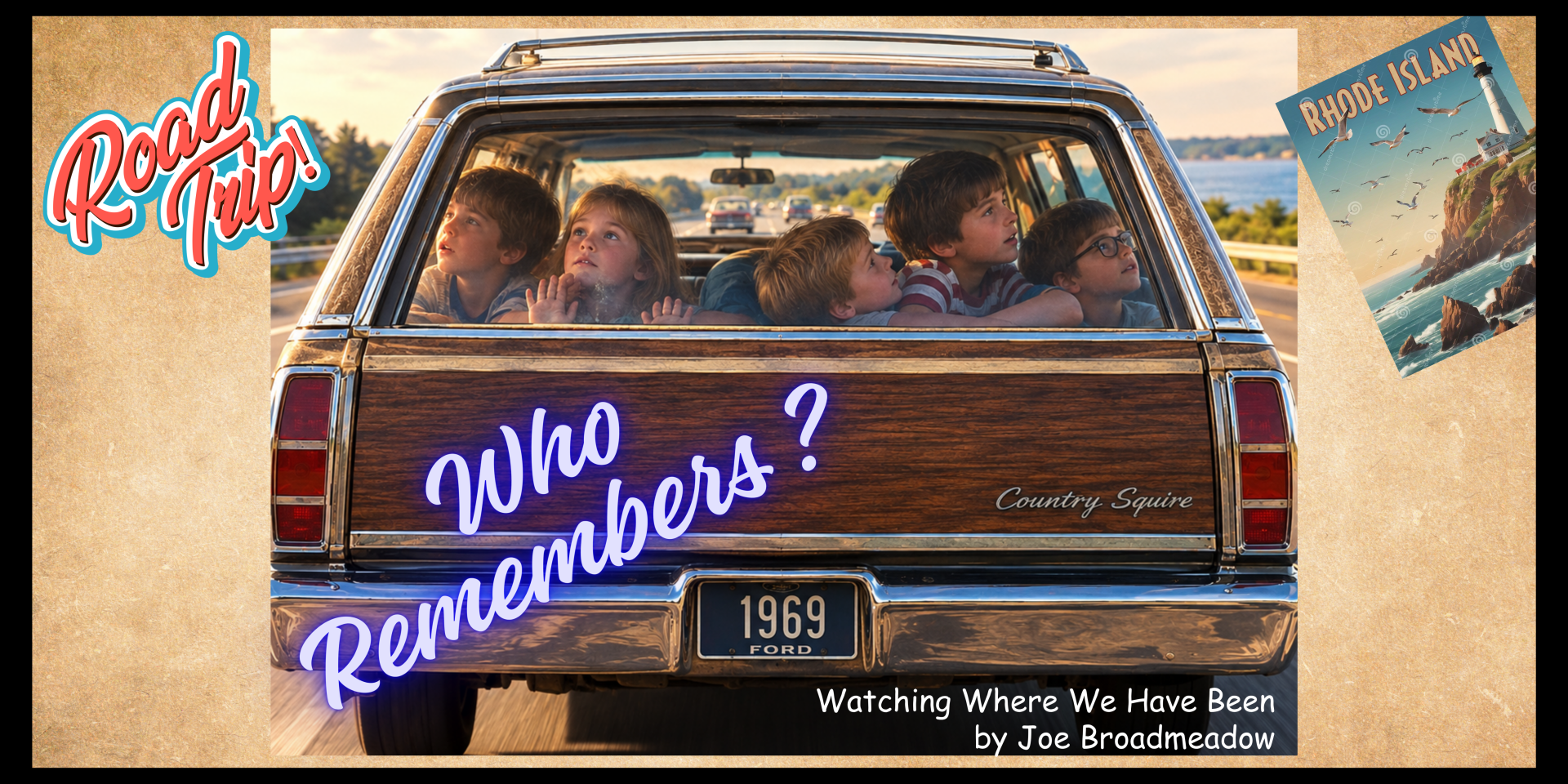
And thus was born the rear-facing seat of the Ford Country Squire.
Ours was a 1969, roughly the length of a fishing trawler, wrapped in that glorious fake wood paneling Ford insisted on calling “simulated woodgrain,” as though anyone had ever mistaken it for an actual tree. It had a V8 that drank gasoline the way a longshoreman drinks on payday, an AM radio with two settings (static and Sinatra), and air conditioning that consisted of four windows and my father’s willingness to open them.
There were enough of us that the Country Squire was not a luxury. It was a logistics decision.
And in the back, behind the second row, behind the groceries, behind the cooler and the folding chairs and the beach umbrella nobody ever successfully opened, was the way back. The rear-facing seat. Two cushions of vinyl the color of a bad decision, facing out the tailgate window at everything we had already passed.
It was the best seat in the car and everyone knew it.
There was a hierarchy to the Country Squire, unwritten but understood, the way certain laws are understood in a squad room. The front seat belonged to adults. The middle belonged to whoever complained the loudest or bled the most recently. The way back belonged to whoever got there first, which meant the way back belonged to whoever was willing to sprint across a hot driveway in bare feet and dive through the tailgate like a man boarding a departing train.
I was fast in those days. I ate a lot of vinyl.
Here is what the safety engineers of the modern era will tell you: there was not a seatbelt within reach. There was no headrest, no crumple zone, no airbag, no restraint of any kind except my mother’s arm, which could reach the third row from the front seat by a mechanism physics has never adequately explained. We sat inches from the rear bumper of a two-ton wagon doing seventy on Route 95, unbelted, unbothered, and utterly convinced we had won something.
We had.
Because facing backward, you saw the world the way nobody else in that car saw it. Everyone up front was watching the road come at them, watching for the exit, watching the gas gauge, watching the clock, watching for whatever was next. We were watching what we had already survived.
We waved at the man in the Chrysler behind us until he waved back, and if he did not wave back within a reasonable interval we escalated. We made the universal arm-pump gesture at truckers, and when the air horn answered it was like the hand of God had reached down and honked. We counted license plates from states we could not find on a map. We narrated the road behind us like sportscasters. We conducted a running feud with a family in a Buick from Pawtucket to the Connecticut line, a war fought entirely in faces pressed against glass, and I maintain to this day that we won it.
The tailgate window could be lowered, which meant exhaust fumes, which meant carsickness for the weak ones, which meant a roadside stop, which meant my father standing on the shoulder with his hands on his hips saying nothing at all, which was worse than anything he could have said.
In July that vinyl reached temperatures normally associated with reentry. You did not sit down on it so much as commit to it. If you were wearing shorts, you left a piece of yourself behind, and you learned to lay down a beach towel the way a bomb technician lays out his tools.
And still. Best seat in the car.
Somewhere on the far side of fifty, you start to notice that the metaphor was sitting right there the whole time, patient as a state trooper behind a billboard.
I have spent a life watching where things had already gone. Twenty years on the job, and the work of an investigator is nothing but that: standing at the tailgate, looking backward at what already happened, trying to make sense of the road behind. Nobody calls the police to report a thing that is about to occur. You get there after. You reconstruct. You look at the receding highway and figure out who did what and in which order and why, and you do it facing the wrong way while the world hurtles on toward something you cannot see.
Turns out I trained for that job in the way back of a Country Squire.
The car went away, of course. They all did. The rear-facing seat was legislated and engineered and liability-lawyered out of existence, and probably that is right, and probably a great many children are alive because of it, and I am not going to argue the point. My grandsons ride in seats that cost more than my first car and are anchored to the frame like artillery. That is progress and I am glad of it.
But something went with it, and I do not think it was only the seat.
We were the last passengers who were not asked to look ahead. Nobody handed us a screen and nobody asked us where we wanted to eat and nobody consulted us on the route. Our entire assignment was to look out the back window at a world that was already finished with us, and to find it hilarious.
There is a kind of grace in that. You cannot steer from the way back. You cannot see the turn coming, you cannot hit the brakes, you cannot do one single thing about what is up ahead. All you can do is watch the road unspool behind you and wave at strangers.
I think about that seat more than a man ought to. The hot vinyl, the fake wood, the smell of gasoline and road dust and somebody’s damp bathing suit, the whole rolling ridiculous ark of it heading someplace we could not see and did not care about.
We were not going anywhere, understand. We were leaving everywhere, continuously, in high style, at seventy miles an hour, backward.
And we waved the whole way.
__________
About the Author
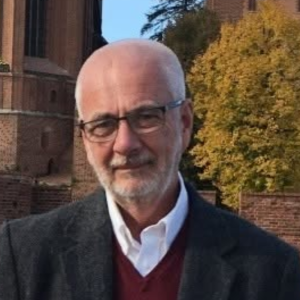
Joe Broadmeadow is a retired Captain of the East Providence Police Department and an award-winning author and publisher. During his more than 20 years in law enforcement, he served in a variety of investigative roles, including Commander of Investigative Services, and worked with the Organized Crime Drug Enforcement Task Force and the FBI Drug Task Force. In 2019, he founded JEBWizard Publishing, an independent hybrid publishing company focused on helping new and emerging authors.
Broadmeadow is the author of numerous fiction and nonfiction works and continues to write about life, people, experiences and the world around him.
Learn more about Joe Broadmeadow, his books and his writing at JoeBroadmeadowBlog.com and Follow on Facebook at www.facebook.com/jebwizard